Pakistani politician and former federal minister Chaudhry Fawad Hussain has sparked a heated debate on religious extremism, highlighting its presence across all communities, including the Ahmadiyya community.
In his tweet, Fawad stated, “Religious extremists, whether Hindu, Muslim, Jew, or Christian, are all the same.” However, he singled out the Ahmadiyya community, alleging their involvement in partition-era violence, particularly in Sialkot. He also referenced their financial support for the All-India Muslim League, writing, “Ahmadis and Ismailis provided the largest funding for the League.”
Fawad’s comments drew mixed reactions, with some members of the Ahmadiyya community acknowledging parts of their history, while others criticized the remarks as inflammatory.
One Ahmadi social media user highlighted the community’s historical advocacy for stricter blasphemy laws in pre-partition India, tweeting, “Prior to the creation of Pakistan, Ahmadis advocated for stricter blasphemy laws, requesting individuals be allowed to file cases for disrespecting religious figures. Now, Ahmadis find themselves targeted by the very laws they supported. A reminder that laws affecting religious expression must be carefully crafted to protect all communities.”
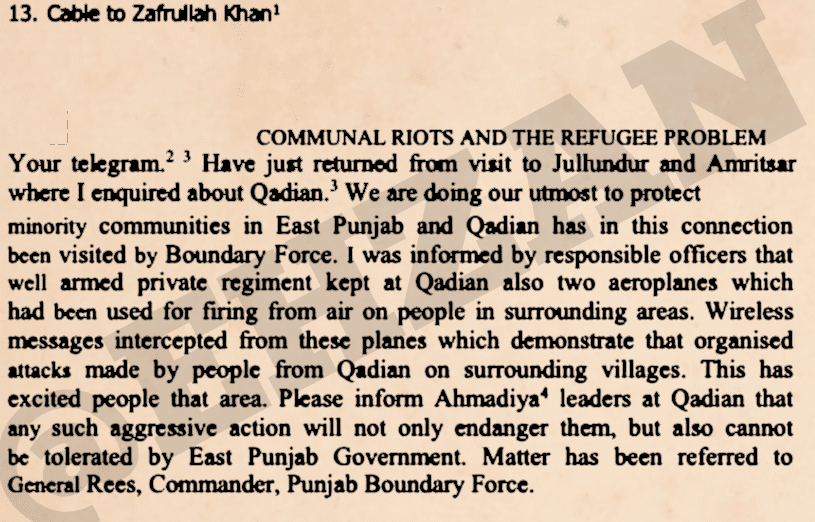
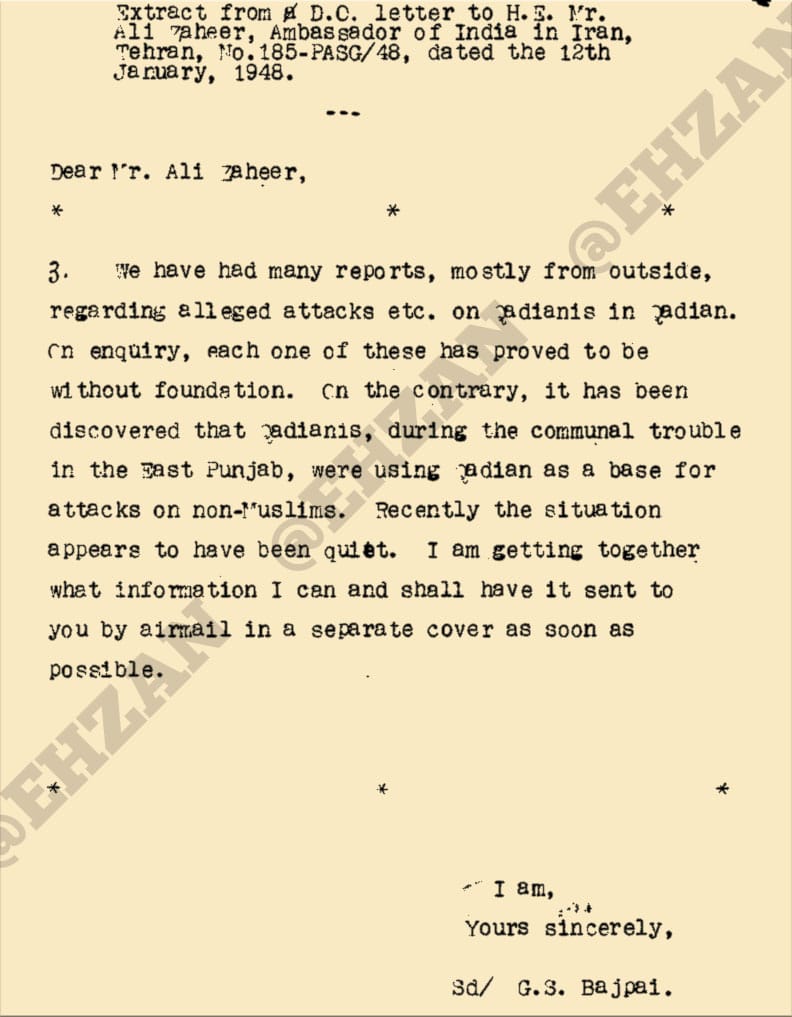
The same user shared historical government documents alleging Ahmadi involvement in communal violence in East Punjab in 1948 and pointed to their support for Ilm-ud-Din, who killed a book publisher in British India over alleged blasphemy.
In an earlier tweet from 2014, Fawad had highlighted Ahmadiyya community’s role in shaping Pakistan’s early religious policies, by supporting the Objective Resolution in 1949. He wrote, “Ahmadis played an active role in the Objective Resolution, and Zafarullah Khan was as communal as any Muslim Leaguer.”
The Objective Resolution, a key document in Pakistan’s early constitutional history, is often seen as a turning point that paved the way for religion’s inclusion in politics. Many argue this decision marginalized religious minorities, including the Ahmadis, who were declared non-Muslims under the constitution in 1974.