The Ahmadiyya Muslim Community held its 28th annual convention on Friday, September 12, 2025, at its center in the Kababir neighborhood of Haifa, Israel. The event focused on promoting unity and love as a response to hatred and extremism, with organizers highlighting compassion as a means to build a better future.
The convention brought together attendees from various religious and cultural communities, including Jewish, Christian, Druze, and Baháʼí representatives. The program featured Quranic recitations, spiritual talks, and educational lectures designed to inspire reflection and foster harmony among participants.
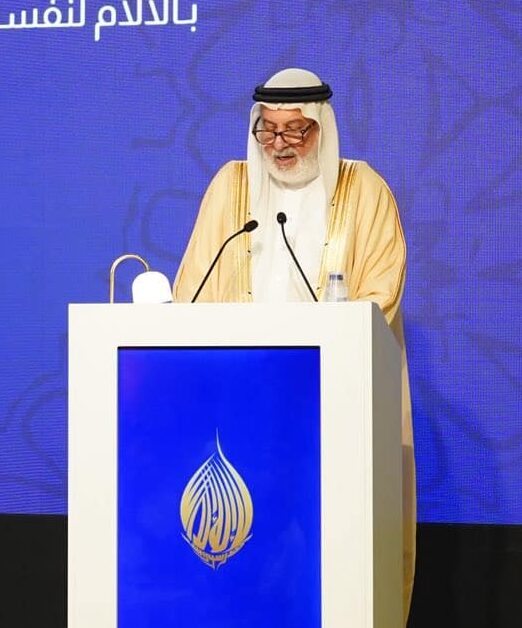
Muhammad Sharif Odeh, the National President of the Ahmadiyya Muslim Community, emphasized the need for unity among good people to confront fanaticism and extremism. “The doors of this convention are open to everyone, regardless of their religion, sect, or origin,” Odeh said. “Together, we can build bridges of understanding and mutual respect.”
In an interview with Bokra.net, Odeh addressed the difficult global and local circumstances, particularly after the events of October 7, 2025, referencing the rise in racism and extremism within Israeli society. “The conditions are very difficult, both globally and locally, and there is a state of anxiety and fear among people,” Odeh said.
He added that the convention included discussions with experts on extremism, including one focused on Israeli right-wing radicalism. Religious leaders were also present to propose potential solutions.
“These gatherings are essential to remove fear, anxiety, and unrest,” Odeh said. “They allow us to engage in dialogue and find common ground. We live together—in workplaces, schools, universities, hospitals, and pharmacies. We are part of this society.”
Odeh also stressed the importance of unity within the Arab community. “Our Arab society is bleeding. Leaders and communities must come together. Unity impacts families, communities, villages, and cities, and provides a strong foundation to face challenges.”
In Israel and the Palestinian territories, the Ahmadiyya population is estimated at over 2,000 individuals, according to the Palestinian news agency WAFA. Of these, approximately 1,500 reside in Kababir, 30 in the West Bank, and 50 in the Gaza Strip.
In 2005, Sheikh Ahmed Shubash, the grand mufti of Palestine, issued a fatwa declaring the Ahmadiyya faith un-Islamic, describing its beliefs as “misguided” and “corrupt.”