Karim Ahmad Khan, the chief prosecutor of the International Criminal Court (ICC), has found himself mired in controversy since issuing arrest warrants in 2024 for Israeli Prime Minister Benjamin Netanyahu and former Defense Minister Yoav Gallant. Khan, a British lawyer of Pakistani Ahmadiyya origin, has faced an array of challenges, including allegations of misconduct, political opposition, and professional sanctions.
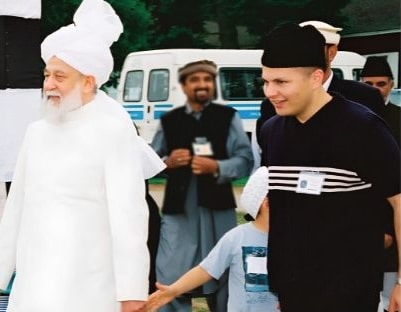
Khan, born in 1970 into an Ahmadi Muslim family in the U.K., studied law at King’s College London. Over his illustrious career, he has worked at prominent international tribunals, including those for Rwanda and the former Yugoslavia. Before being elected chief ICC prosecutor in 2021, Khan led a UN investigation into atrocities committed by ISIS against the Yazidi community in Iraq. He was first married to Yasmin Rehman Mona, the daughter of Mirza Tahir Ahmad, the fourth caliph of the Ahmadiyya Muslim Community. Currently, he is married to Dato’ Shyamala Alagendra, a Malaysian lawyer specializing in international humanitarian and criminal law.
The controversies surrounding Khan began to intensify after he ordered the issuance of arrest warrants for Israeli Prime Minister Benjamin Netanyahu and now-former Defense Minister Yoav Gallant for alleged war crimes and crimes against humanity in Gaza. The charges included using starvation as a weapon during the blockade of Gaza and targeting civilians. Palestine accepted ICC jurisdiction in 2015, enabling the court to investigate alleged crimes in the region, despite Israel not being a party to the Rome Statute.
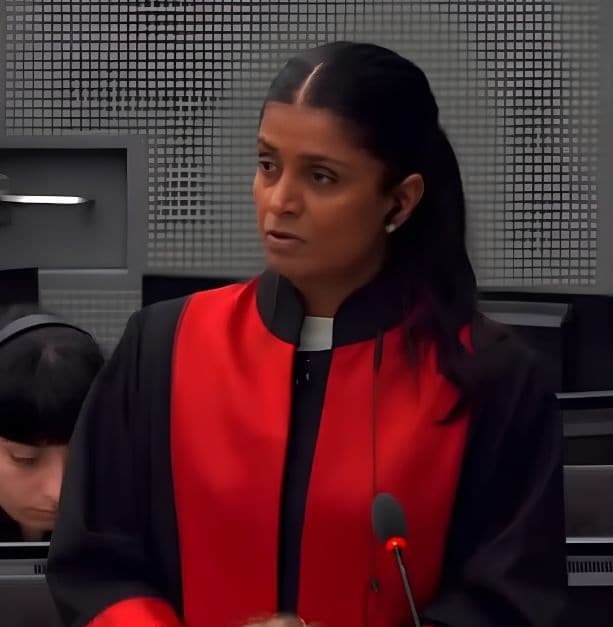
The move, however, provoked strong backlash, particularly from the United States and Israel. In February 2025, then-U.S. President Donald Trump imposed sanctions against Khan and other ICC officials, characterizing the court’s investigations into U.S. and Israeli actions as illegitimate. The sanctions included freezing assets and barring entry into the United States, citing threats to American sovereignty and national security.
Amid the political fallout, Khan faced additional personal scrutiny. In May 2025, he temporarily stepped aside from his ICC role after allegations of sexual misconduct surfaced. A former ICC staffer accused him of coercive sexual conduct during work missions. While the United Nations’ Office of Internal Oversight Services did not find evidence of misconduct, Khan’s critics exploited the allegations to question his credibility. Khan, who has consistently denied the allegations, called the investigation flawed and accused ICC member states of politicizing the process.
In an interview with Mehdi Hasan of Zeteo, Khan reiterated his denial, stating, “In the UN report, there are 137 findings. Not one of those findings makes determinations or findings of conduct that could be categorized as inappropriate in any shape or form.”
He said most media outlets reported from a two-page summary that has been prepared, which fundamentally misrepresents the findings of the UN investigation. He added, “What is authoritative is the report itself, and within the 137 findings, there is no finding of misconduct or abuse of authority.”
The controversies escalated further in June 2026 when the British Bar Standards Board suspended Khan over the same allegations. The ICC’s governing Assembly of States Parties is set to vote in July on whether to remove him permanently. Despite these challenges, Khan maintains his innocence and emphasized that the allegations stem from attempts to undermine his work at the ICC.
He is also on record accusing former U.K. Prime Minister David Cameron and U.S. Senator Lindsey Graham of applying political pressure in opposition to the arrest warrants, raising questions about the independence of global justice systems.